
Our 2025 Nature Highlights
With the end of the year in sight it’s only natural that we spend some time looking back and reminiscing on the last 12 months. Here are a few of my highlights from 2025:
Slow-ly does it!
Rather surprisingly for someone who spends a lot of their time looking for and looking at wildlife I began my 50th year on earth having never seen the UK’s most widespread reptile – the Slow worm! It was not for want of trying or looking but our legless lizard has always eluded me. All that changed in early summer this year.
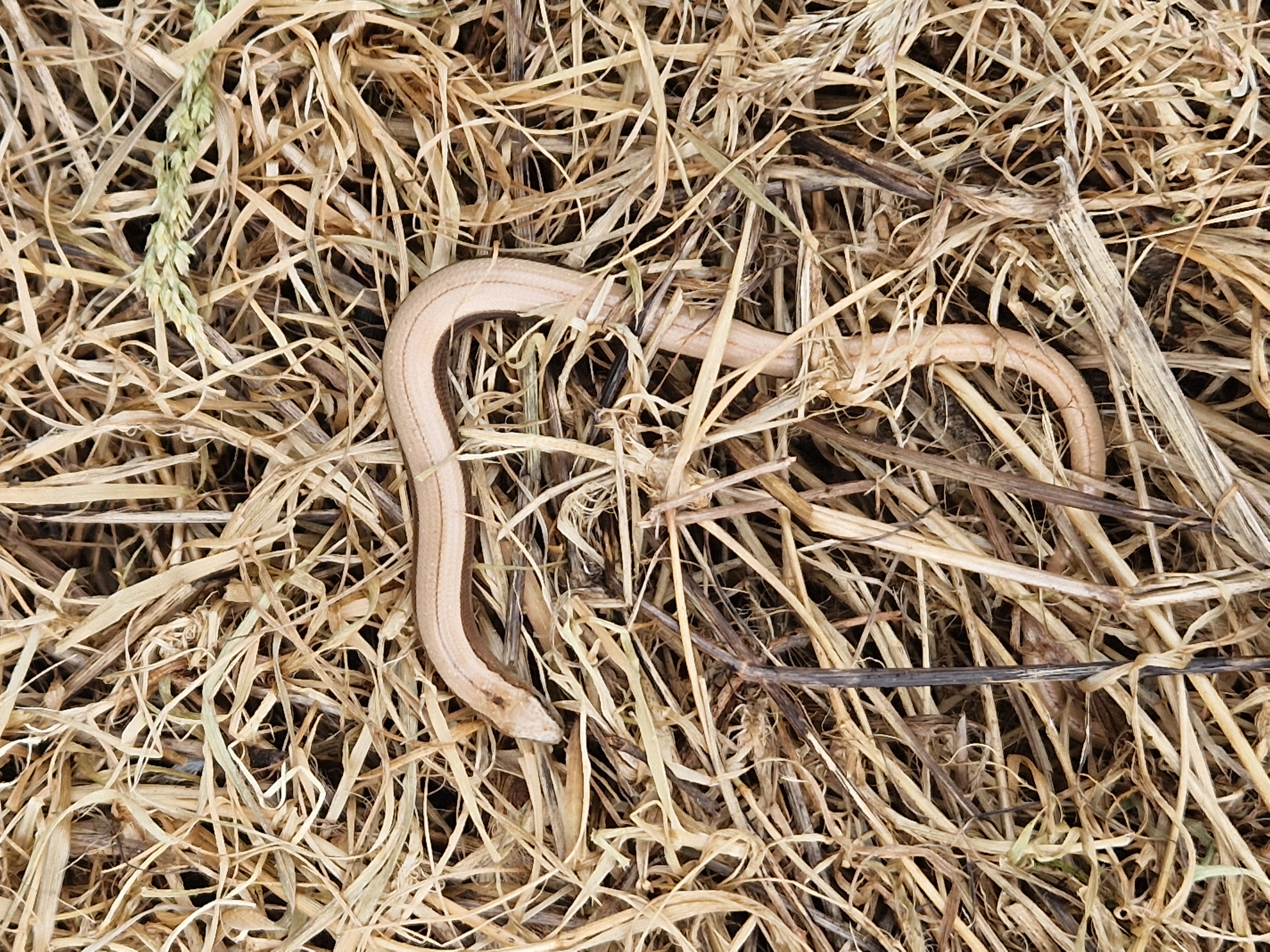
Slow worm at High Leas Farm
As part of a year of surveying up at High Leas (a fantastic regenerative farming project near Riber) we had placed corrugated metal cover objects at several locations around the farm in an effort to survey the presence of reptiles on the farm. Regular checking was turning up everything from Field Voles to Ant nests but no reptiles until one morning a sheet was flipped over to reveal a beautiful juvenile Slow worm! This wonderful reptile was minding its own business enjoying the warmth under the metal sheet and I managed to grab a couple of quick pics before it burrowed into the longer grass. I would see what was probably the same animal under the same sheet on two further occasions – what a wonderful 50th present!
Wheatears – from arrival to fledging
Its very rare I’ve had chance to watch the complete breeding cycle of a bird species but I got the opportunity in 2025 with one of my favourite birds – the Wheatear. What’s more as the birds in question were close to one of our regular walking routes so I got the opportunity to introduce lots of guests to them too!
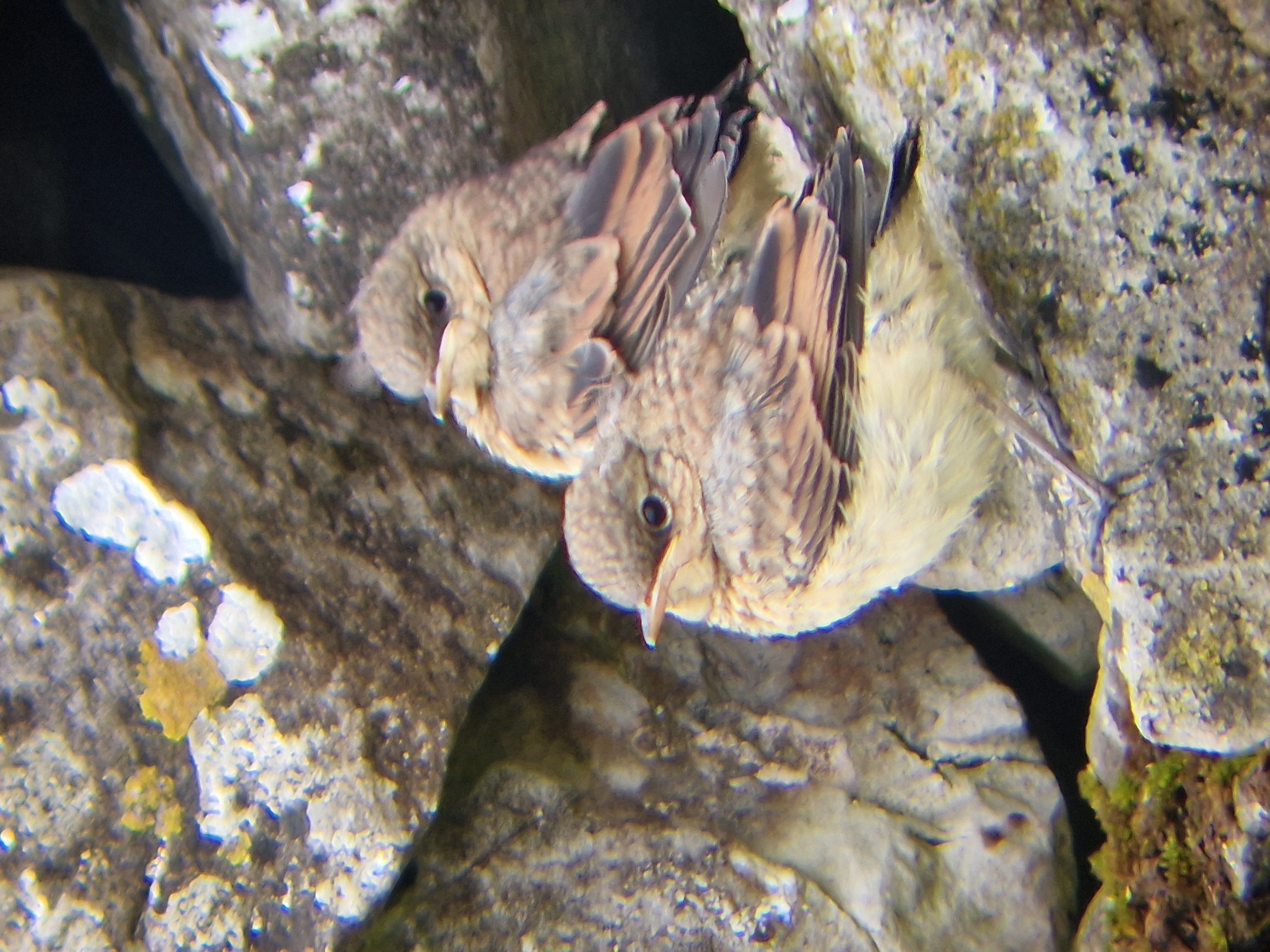
Fledgling Wheatears in the White Peak
The birds arrived in late March and we got to watch the striking male bird singing and displaying from prominent perches. A couple of weeks later we could see the female bird carrying nesting material into the chosen nest site at the base of a collapsed dry stone wall and later still both birds were busy gathering food in the nearby fields and quietly visiting the nest to feed the hungry chicks within. And finally when I visited on 29th May I was delighted to be greeted by two wonderful fledglings!
Loch Coruisk
We enjoyed a wonderful week on Skye in May with so many fantastic highlights but our trip to Loch Coruisk was incredibly special. Loch Coruisk is an isolated loch lying at the foot of the spectacular Black Cuillin ridge which can be reached either by a 10 mile walk or, as we chose, by boat from Elgol. The boat allowed us great views of the small isles – Canna, Eigg, Muck & Rum – as well as a group of harbour seal on the rocks near the landing area with a gorgeous summer plumaged Great Northern Diver. Even better was to come with a stunning pair of adult Golden Eagle drifting around the rocky peaks.
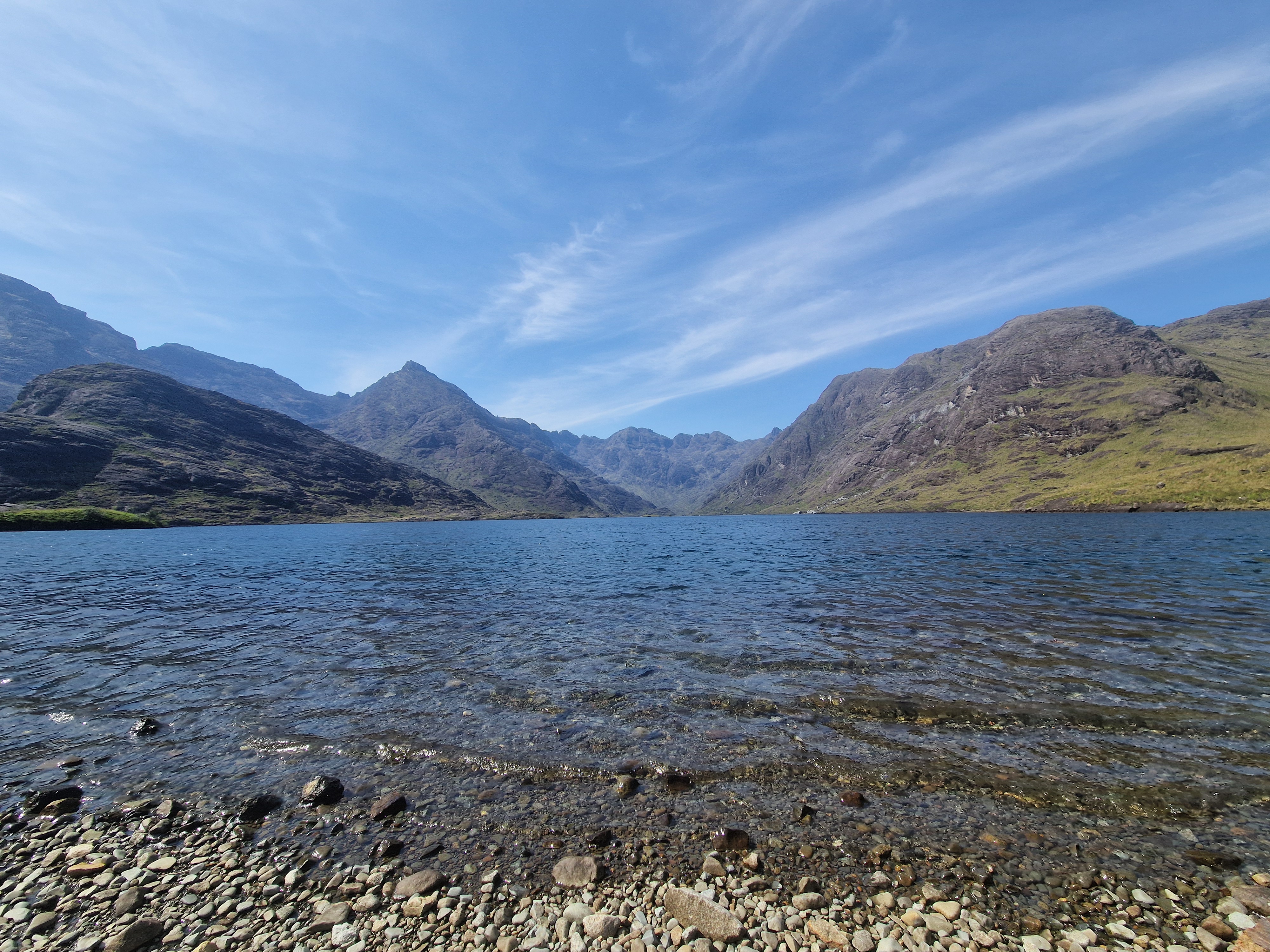
Loch Coruisk
Loch Coruisk proved to be a very special place with incredible mountain views and we spent several hours strolling around its shoreline where the lower slopes were festooned with insectivorous Butterworts (a first for me) with the boggier spots also supporting carnivorous Sundews. On the water a pair of Red Throated Diver called and showed nicely along with a pair of Red Breasted Merganser and several Arctic Tern all of which appeared to be eyeing up the rocky islets to nest on. Higher up the slopes the occasional Wheatear or Stonechat hopped into view while overhead Ravens called and one or both of the Goldies would occasionally reappear. As we waited for the return boat Loch Coruisk had a couple of final surprises with a fine Greenshank calling and feeding on the rocky shoreline and a summer plumaged Black Guillemot fishing nearby.
Meeting the Mossfool
Its always nice to see a species for the first time and with a particular liking for montane species, Dotterel had been high on my wish list for many years. I’d always assumed a trip to the Cairngorms might offer me my best chance to see this increasingly scarce breeding wader so when one turned up just outside Hathersage in September it was too good an opportunity to miss.
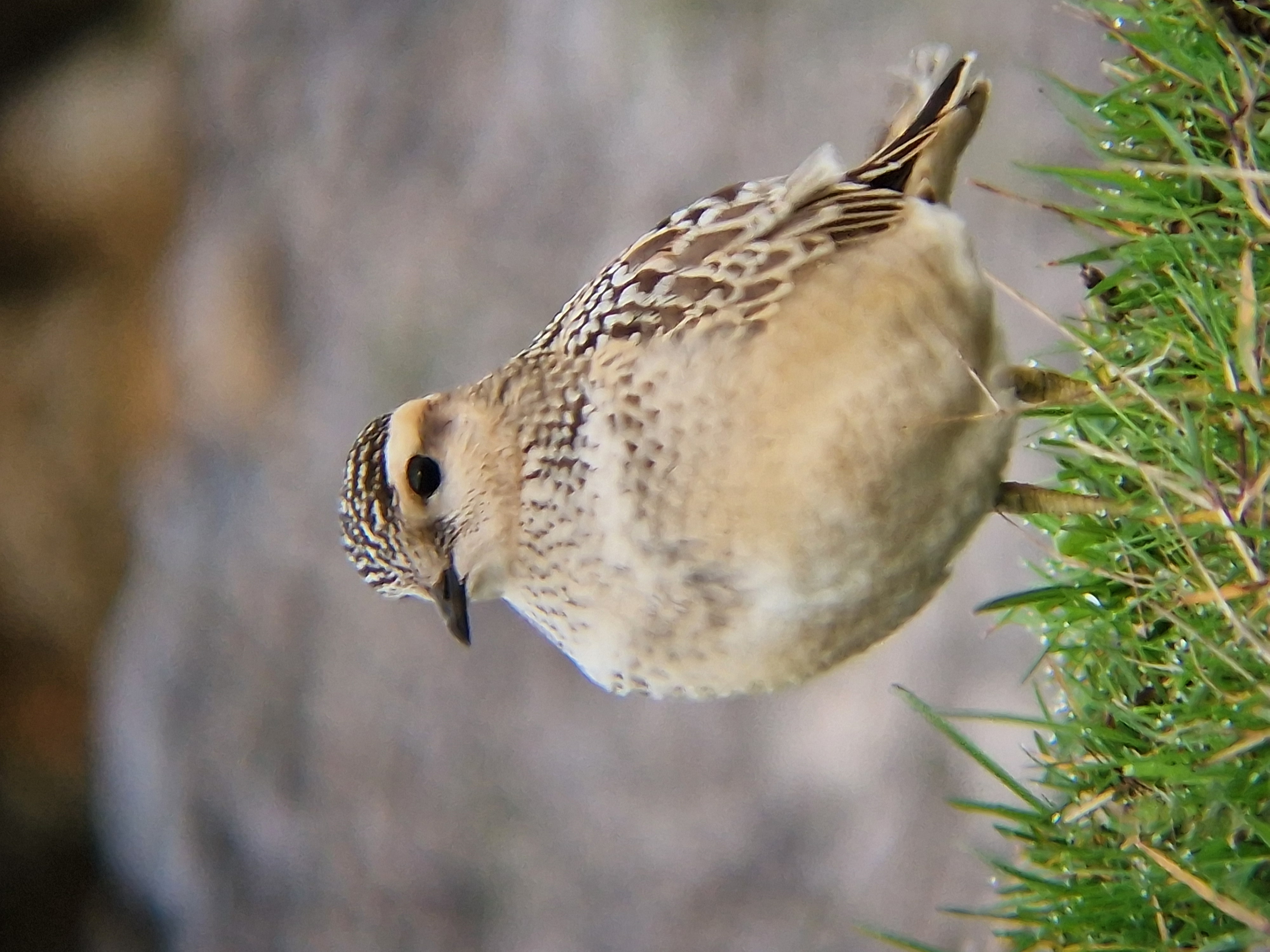
Juvenile Dotterel
Dotterel were sometimes called Mossfool – a name that reflected both their mossy/stony breeding areas and their tame & trusting nature around humans – and this bird was a juvenile that had likely come out of a nest in Scandinavia and was on its way south to its wintering grounds in North Africa when its stopped for a few days to feed up in a stony, boggy spot (like a mini Cairngorm plateau) near the Burbage valley. The bird was indeed incredibly tame and allowed viewing down to a few metres where its wonderful plumage was easy to appreciate. Without doubt the bird of the year!
